ML Inference Fleet Ops
Stop overpaying for GPU idle time across 100+ models
MLSrvyn scales each inference endpoint based on its traffic shape — not a blunt fleet-wide policy. Latency SLOs enforced. Cold starts eliminated. GPU utilization up to 40% better.

The Problem
One scaling policy for 100 models is a tax on your GPU budget
Your recommender fires 10,000 RPS at lunch. Your LLM endpoint handles 3 concurrent sessions at 2am. Treating them the same — same scale-out threshold, same min-replica count — means either cold starts during spikes or thousands of idle GPU-minutes overnight.
How It Works
Traffic shape-aware auto-scaling, explained
Traffic Shape Profiler
MLSrvyn continuously profiles each model's request distribution — burst coefficient, diurnal pattern, inter-arrival time. Classifies each endpoint into a scaling archetype.
SLO-Driven Scaling Engine
Scaling decisions are made per model, per SLO tier. A p50 target for batch jobs. A p99 hard ceiling for synchronous recommenders. Your latency budget, not a blunt CPU threshold.
GPU Bin-Packing Allocator
When scaling down, MLSrvyn rebalances replicas across fewer physical nodes — packing workloads tight before releasing GPU capacity. No wasted partial-node allocations.
The Platform
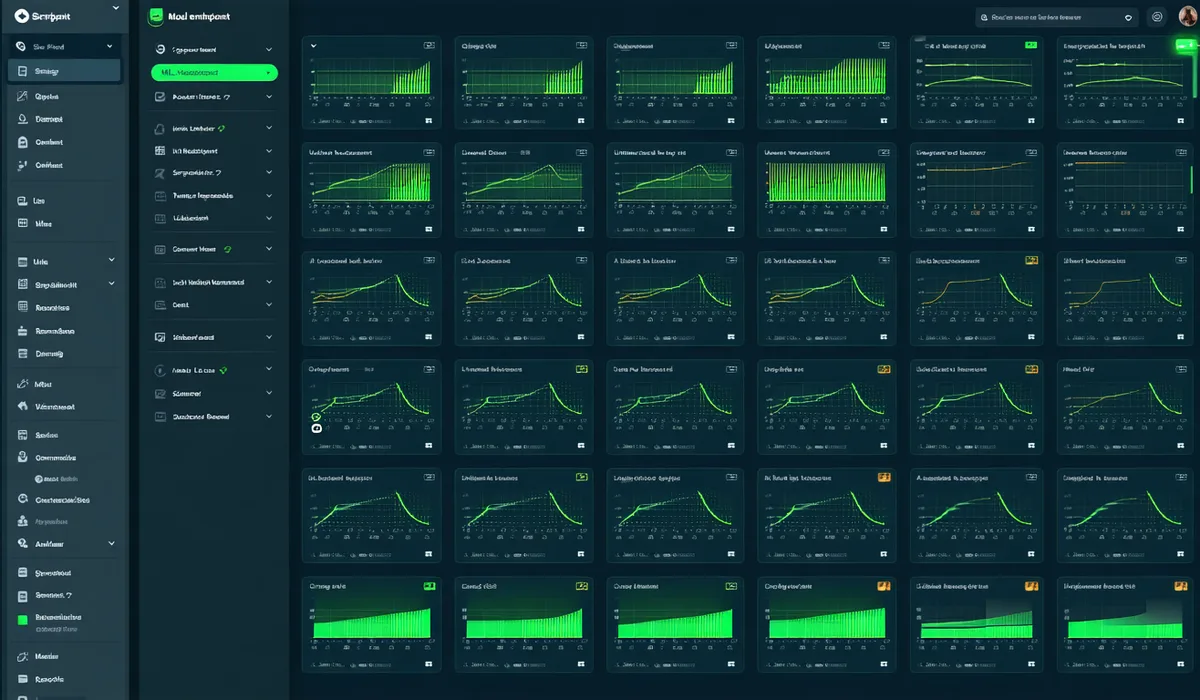
The MLSrvyn Platform
Per-model fleet overview, scaling policy editor, GPU utilization heatmap, and SLO compliance dashboard — in one pane.
Use Cases
Built for how ML actually runs in production
Recommendation Systems
Handle bursty traffic spikes without cold-start gaps that break engagement loops.
Learn moreLLM Serving
Long-running sessions need replica persistence, not scale-to-zero. MLSrvyn knows the difference.
Learn moreReal-Time Scoring
Sub-100ms SLO on fraud and risk models — even during traffic surges that hit at irregular intervals.
Learn moreFrom the Field
From the ML infrastructure teams
We had 47 models in production across 16 H100 nodes. Writing a per-model scaling config by hand was consuming weeks of engineering time. MLSrvyn profiled all 47 traffic shapes in a week and our GPU spend dropped 38% within the first month — without a single cold-start SLO breach.
Our two-tower recommendation model cold-started every morning at 9am — p99 would spike to 94ms against a 30ms SLO, and fallback responses ran at 38% for the first 90 seconds. After deploying MLSrvyn's Bursty archetype with pre-warming, p99 at the morning peak is consistently 11ms. The traffic shape profiler knew the diurnal pattern before we did.
We were running 12 models on 8 A100 GPUs at 34% average utilization. The problem wasn't over-provisioning — it was one-model-per-GPU allocation habits. MLSrvyn's bin-packing co-located 4 smaller models on shared GPUs without memory conflicts. Utilization went to 81% and we released 3 nodes. Same throughput, same SLO compliance, 37% fewer GPU-hours billed.
Get Started
Ready to stop paying for idle GPU time?
Request access and our team will walk you through a live fleet analysis of your current inference costs.
MLSrvyn is an inference optimization layer — not a model training platform, not a model registry, and not a GPU cloud provider. We connect to your existing cluster and manage scaling policy. Your compute costs stay with your provider.